Water Leak at Home? What to Do Before the Cleanup Begins
A wet patch on the carpet can look like a small cleaning problem. Before you reach for towels or a machine, find out whether the area is safe and whether the leak is still active. Water leak cleanup starts with controlling the source and understanding what became wet, not simply making the visible surface look dry.
Put safety before moving furniture
Keep people and pets away from the affected area until you understand the hazards. Water near outlets, appliances or electrical equipment needs special care. Do not enter standing water to reach a switch, unplug a machine or move a power cord. If electricity or structural safety is in question, stay out and get qualified help.
A ceiling that is sagging, a damaged electrical fixture or water from an unknown source is not a routine carpet-cleaning situation. Do not disturb the area to see what is underneath. Tell the appropriate professional what you can observe from a safe position. If the water may be contaminated, avoid contact and get advice from a professional who handles that type of damage.
Stop the source only when you can do so safely
Cleaning cannot solve a leak that is still adding water. If you know the source, know how to shut it off and can reach it safely, stop the flow. Otherwise, contact the building manager, plumber or other appropriate professional. Do not dismantle an appliance or open a wall just to locate a hidden leak yourself.
In a condominium or apartment, let the property manager know promptly. Water may involve another unit, shared plumbing or building materials outside your home. Explain where you first noticed it and whether it appears to be spreading. Avoid assuming that the room with the wet carpet is the place where the leak began.
Record what you can see
From a safe position, take photos of the affected area and note when you discovered the leak. Include nearby flooring, furniture legs and baseboards if they are visibly wet. Keep any repair or cleanup paperwork together. If an insurance claim may be involved, ask your insurer what documentation it needs and follow its instructions.
Useful details for a cleanup conversation include the suspected water source, the approximate time it began, the rooms involved and whether the flow has stopped. Say when a detail is unknown. A clear description helps the person assessing the job ask the right questions, but photos and a phone conversation cannot establish the full extent of hidden moisture.
Water extraction and drying are different steps
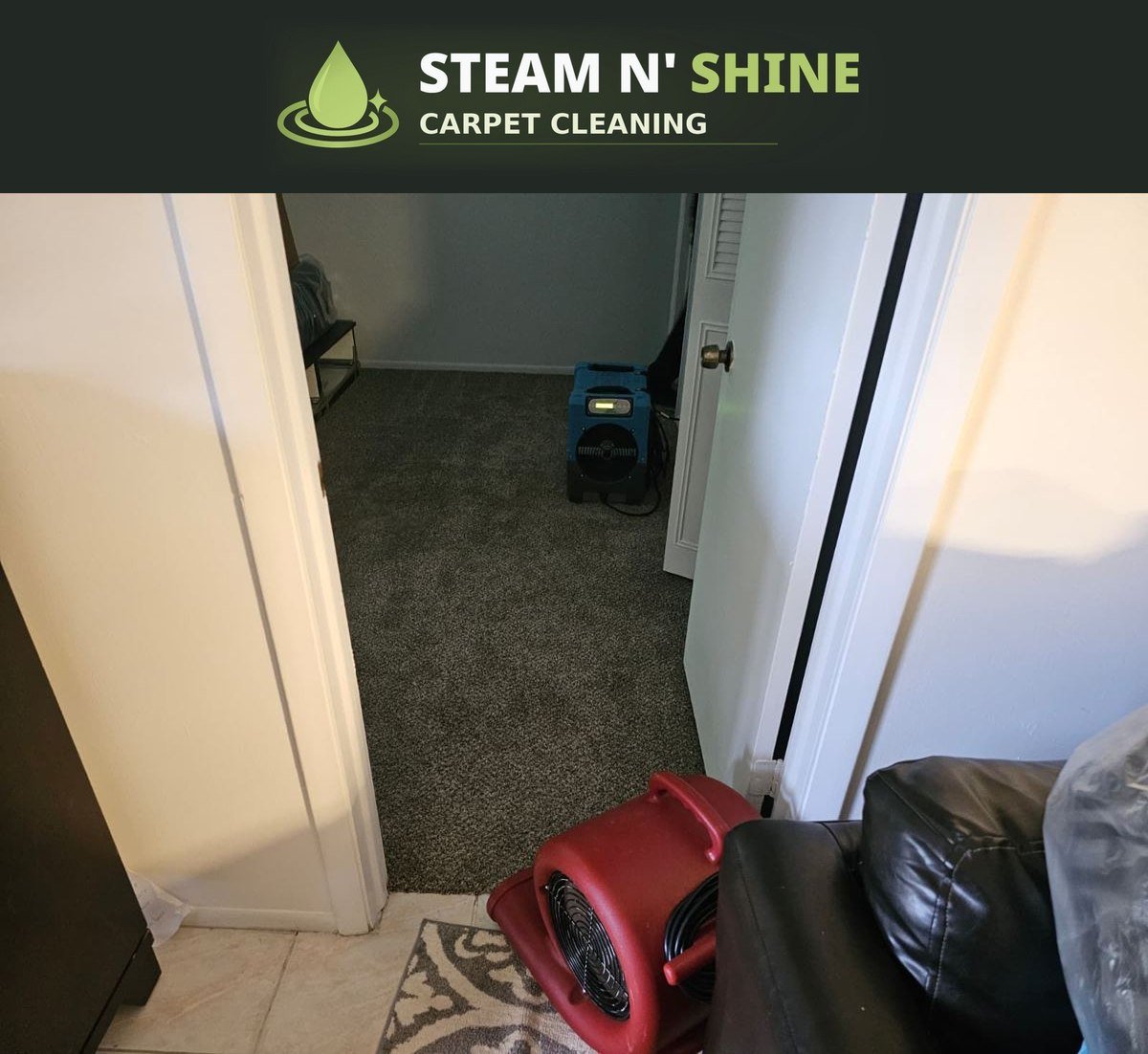
Removing visible water does not, by itself, establish that the carpet, padding or surrounding materials are dry. Moisture can remain below a surface that feels better to the touch. The drying plan needs to consider the materials involved, the source of the water and the condition of the affected area.
Ask what will be checked before the work begins, which materials the proposed work covers and how drying progress will be assessed. Also ask what would change the plan. Cleaning an existing carpet and deciding whether water-damaged materials can remain in place are different decisions. Do not treat a normal carpet-cleaning appointment as a substitute for assessing water damage.
Act promptly without accepting a drying guarantee
The U.S. Environmental Protection Agency advises drying water-damaged areas and items within 24 to 48 hours to help prevent mold growth. That is guidance to act promptly, not a promise that every wet room can be dried within a fixed period. It also does not mean that waiting until the end of that period is safe.
The condition and type of material matter. Do not cover damp carpet with rugs or put belongings back simply because the top feels dry. Ask when the area can be used again and what signs should prompt another assessment. Persistent dampness, a new odor or a returning wet patch calls for further attention, not a second layer of fragrance.
What not to do while waiting for advice
Do not use a household vacuum to pick up water. Do not bring electrical equipment into a wet area when its safety has not been established. Avoid adding cleaning products to an unknown water problem or mixing products together. If you suspect that a heating or air-conditioning system has been affected by mold, EPA guidance says not to run that system until the issue has been assessed.
Keep the affected area separate from everyday household activity where you can do so safely. Do not disturb visible mold or start removing building materials as part of ordinary tidying. The right response depends on what caused the damage and what became wet; an online checklist cannot replace an assessment of your property.
Discuss the job before booking
When contacting Steam N’ Shine about water extraction and drying, describe the source, the rooms involved and whether the leak has been stopped. Mention electrical concerns, visible damage and any suspected contamination before an appointment is arranged. This helps establish whether the requested work is within the service offered and what needs separate attention.
Ask for the proposed scope, the price and any limits before work begins. Confirm availability directly rather than assuming an arrival time from a website. The aim is a clear next step: address the source, agree on the appropriate cleanup work and understand how the affected materials will be evaluated before the room returns to normal use.